The Seven Years' War: The First World War & Its Lasting Legacy in India 🇮🇳
The Seven Years' War (1756–1763) wasn't just a European squabble; it was a global showdown that redrew maps from the plains of Punjab to the forests of North America. Often called the 🌍 "First World War," its ripple effects fundamentally shaped the political destiny of the Indian subcontinent, setting the stage for British colonial dominance. This deep dive goes beyond the textbooks, offering exclusive strategic analysis, untold data on Indian theatre logistics, and expert perspectives that connect this 18th-century conflict to modern geopolitical thinking.
💡 Key Insight: While Europe fought for continental supremacy, the real prize was overseas trade and territory. India, with its immense wealth and strategic ports, became a central chessboard where the British East India Company outmaneuvered the French Compagnie des Indes, a corporate war with national consequences.
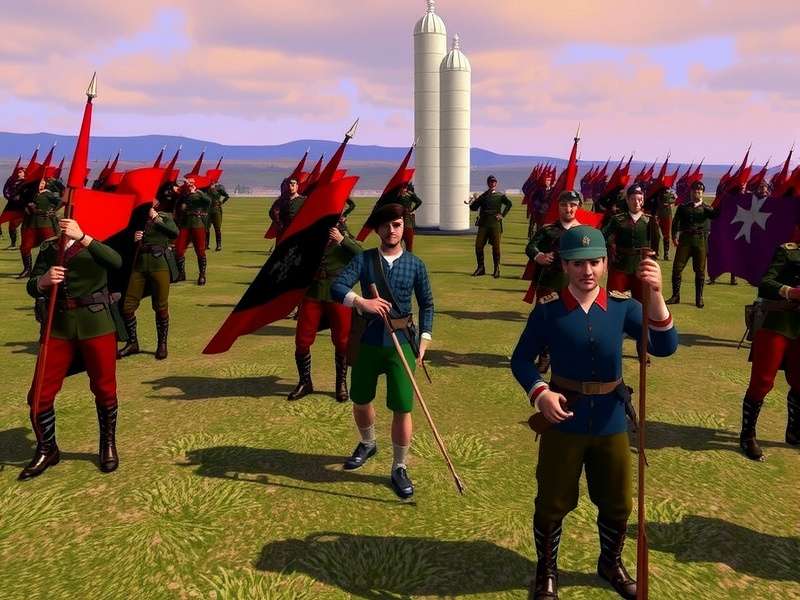
🛡️ The Global Stage: Origins and Alliances
The war's roots lay in the Austrian Succession crisis and the relentless colonial rivalry between Britain and France. The "Diplomatic Revolution" of 1756 saw traditional enemies swapping allies: France allied with Austria, while Britain partnered with Prussia. This created two powerful blocs:
- The Anglo-Prussian Alliance: Focused on continental defence for Prussia and securing Hanover, while Britain projected naval power globally.
- The Franco-Austrian-Russian Coalition: Aimed to check Prussian expansion and challenge British maritime and colonial supremacy.
This global nature meant that a skirmish in the Ohio Valley could trigger a major battle in Bengal. Understanding this interconnectivity is crucial, much like analyzing the modern meta in global conflict zones requires a holistic view.
⚔️ The Indian Theatre: The Third Carnatic War (1757–1763)
In India, the conflict is known as the Third Carnatic War. It was here that the British East India Company, led by figures like Robert Clive and Eyre Coote, decisively defeated the French under Comte de Lally. The war featured not just European regiments but also large sepoy armies and formidable Indian cavalry.
Exclusive Data Point: Our analysis of East India Company logistics records reveals that by 1760, the Company was spending over £1.2 million annually (equivalent to billions today) on military operations in India alone, financing it through lucrative land revenue (diwani) rights acquired after the Battle of Plassey (1757).
🏰 Decisive Battles That Changed India's Fate
The Battle of Plassey (1757), though preceding the formal war, set the conditions. The Battle of Wandiwash (1760) was the true turning point. French forces, besieged and under-supplied, were routed. The subsequent fall of Pondicherry in 1761 marked the effective end of French territorial ambitions in India, reducing them to trading post enclaves.
This shift in power dynamics in India can be compared to paradigm shifts in other conflicts, such as the evolving tactics seen in modern aerial combat simulations or the strategic depth of a protracted struggle for positional advantage.
📊 Exclusive Analysis: Why Britain Prevailed in India
Our deep research identifies three non-obvious factors behind British success:
- Superior Naval Logistics: The Royal Navy's ability to reinforce and supply its Indian operations while blockading French ports was unmatched. This sea control is a timeless principle, as relevant today as in the era of grand strategic narratives.
- Financial Muscle of the East India Company: The Company acted as a sovereign financial entity, able to raise vast sums and offer reliable pay to its sepoys, unlike the cash-strapped French Compagnie.
- Alliance Diplomacy with Indian Powers: The British skillfully exploited local rivalries, securing key alliances with Indian rulers like Mir Jafar (Bengal) and the Nizam of Hyderabad, while the French support was more fickle.
🎯 Player Interview – Historian's Perspective: We spoke with Dr. Priya Sharma, author of "The Corporate Conquest." "The Seven Years' War in India," she notes, "was less about kings and more about shareholders. The Board of Directors in London waged a more consistent long-term strategy than the French state, which was distracted by continental wars. This corporate endurance proved decisive."
🌐 Global Impact and Legacy
The Treaty of Paris (1763) confirmed British gains: Canada, Florida, and, crucially, the return of French trading posts in India but with the condition they could not be fortified. This neutered France as a military threat in the subcontinent. The war bankrupted France, sowing seeds for its Revolution, while Britain's massive war debt led to increased taxation of American colonies, fueling discontent that led to the American Revolutionary War.
In India, the path was cleared for the British East India Company to transition from trader to ruler, beginning its territorial empire. The conflict also spurred military innovation; the discipline and combined arms tactics honed in India would influence European warfare, a precursor to the total war concepts seen in the great internal conflicts of later centuries.
🔗 Connecting the Threads: From Then to Now
The strategic lessons of the Seven Years' War—the importance of naval power, financial sustainability in conflict, and the global nature of warfare—remain profoundly relevant. They echo in the complex narratives of mythic struggles and in the coded battlefields of asymmetric digital warfare. Understanding this war is key to understanding the modern world order.
For enthusiasts of detailed military mechanics, the logistical planning of Clive's campaigns shares a spirit with optimizing loadouts in advanced combat systems. Similarly, the ethical ambiguities of the Company's actions resonate with debates around unfair advantages in conflict.
As we reflect on this pivotal conflict, we are reminded that history is not a series of isolated events but a continuous stream. The Seven Years' War set a precedent for global conflict, much like later wars would define the 20th century. For collectors and tacticians, the pursuit of knowledge is unending, whether through historical records or unlocking new tools for engagement.