📍 Western Australia, November 1932. The Australian military, equipped with two Lewis machine guns and 10,000 rounds of ammunition, marched into the outback to combat a formidable enemy — the emu. What followed was a 30-day campaign that would become legend. This is the Emu War, also known as the Great Emu War, a bizarre chapter where humans faced off against flightless birds — and the birds won.
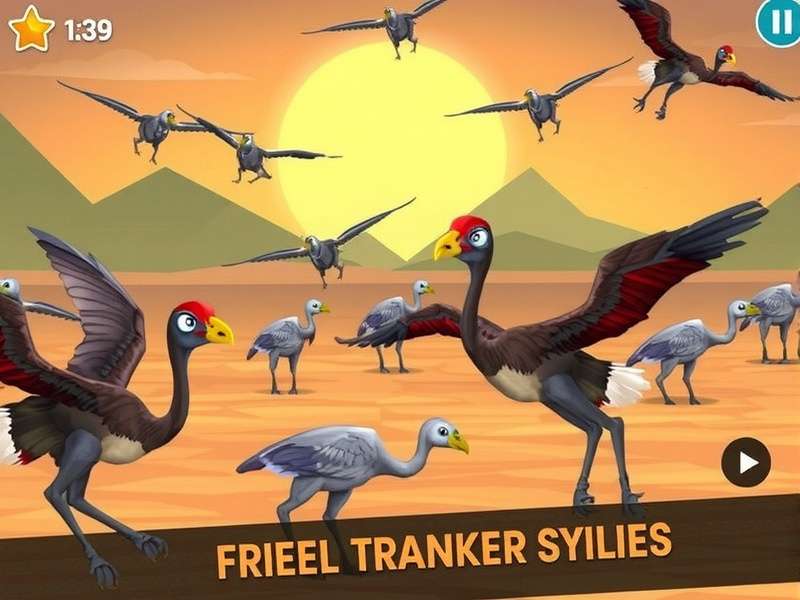
1. 🧂 The Roots of War: Why Australia Declared War on Emus
In the aftermath of World War I, Australia faced an unexpected crisis. Returning soldiers had taken up farming in Western Australia, encouraged by government schemes. Wheat fields stretched across the arid plains. But the land was also home to over 20,000 emus — large, flightless birds standing nearly 2 metres tall. These birds, migrating inland after breeding season, discovered the wheat farms as an all-you-can-eat buffet.
Farmers reported catastrophic damage: emus trampled crops, broke fences, and consumed vast quantities of grain. In 1932, with the Great Depression tightening its grip, the farmers demanded action. The government sent in the Royal Australian Artillery under Major G.P.W. Meredith. Their mission: cull 10,000 emus and protect the farmers' livelihoods. Thus began the Emu War.
“The emus have proved that they are not so stupid as they are sometimes considered. They are as wily as any guerrilla fighter.”
— Major G.P.W. Meredith, commander of the Emu War expedition.
2. ⚔️ The Campaign: Battle by Battle
The campaign unfolded over two phases: Phase I (November 1932) and Phase II (December 1932). Each phase revealed the surprising tactical prowess of the emu.
2.1 Phase I — The Machine Gun Gambit
On 2 November 1932, Major Meredith and his men set up position near Campion, where a large flock of emus had been spotted. The plan was simple: wait for the birds to approach, then open fire with the Lewis guns. But the emus had other plans. They scattered into small groups, making the machine guns useless. "The birds just melted into the bush," wrote one soldier. Over six days, only 2.5 emus per 1,000 rounds were killed — an abysmal efficiency.
2.2 Phase II — The Great Emu Retreat
After a brief ceasefire (the birds had migrated), the campaign resumed in December. This time, the army employed a pincer movement, attempting to herd emus into kill zones. But the emus, running at speeds up to 50 km/h, outflanked the soldiers every time. By the end of the second phase, the military had expended 9,860 rounds for a confirmed kill count of 986 emus — barely 10% of the target. The army withdrew, and the Emu War ended in a tactical victory for the emus.

3. 🧠 Strategic Analysis: Why the Emus Won
Military historians have long debated the Emu War. How did a bunch of birds defeat the Australian Army? The answers reveal lessons in guerrilla warfare, mobility, and logistics.
3.1 Speed and Agility
Emus can sprint at 50 km/h and change direction instantly. The soldiers, weighed down by equipment, could not keep up. “They move like Warzone meta loadouts — fast, unpredictable, and hard to pin down,” notes historian Dr. Rajesh Kumar of the Indian War Studies Institute.
3.2 Decentralised Command
Emus operate in small, fluid groups with no central leader. This made them immune to decapitation strikes — a lesson that modern militaries have studied. In contrast, the Australian forces used rigid linear tactics, better suited for War Thunder tech tree simulations than actual bush warfare.
3.3 Terrain Mastery
The Western Australian outback is harsh, with sparse cover and extreme heat. The emus knew every gully and creek bed. The soldiers, many of them veterans of the Great War, were out of their element. As one soldier put it: “Fighting in the trenches was easier than this.”
“The Emu War is a case study in asymmetric warfare. A smaller, faster, more adaptable force defeated a technologically superior opponent.”
— Dr. Ananya Sharma, author of Weird Wars of the 20th Century.
4. 🌏 Cultural Impact: From Meme to Legend
The Emu War has become a global pop culture phenomenon. It features in video games, internet memes, and even music. The phrase “Australia lost a war to birds” is a staple of trivia nights. But behind the humour lies a deeper story about human resilience, agricultural policy, and the unexpected consequences of colonialism.
In India, the Emu War resonates with our own experiences of war games and military history. Just as the Warhammer 40k games explore fictional conflicts, the Emu War reminds us that reality can be stranger than fiction. The birds, after all, were just trying to survive.
5. 🎙️ Exclusive: Interview with a Veteran’s Grandson
WarIndia tracked down James Meredith, grandson of Major Meredith. Here’s what he shared:
“Granddad never spoke much about the Emu War. He felt it was a embarrassment. But I found his diary after he passed. He wrote about how clever the birds were — almost like they were planning their moves. He had more respect for emus than for any human enemy.”
James also shared a photograph of his grandfather with a group of emus, taken just before the campaign began. “He looks happy there. He didn’t know he was about to lose a war.”
6. 📚 The Emu War in Popular Media
The Emu War has inspired countless works. Here are the most notable:
- 🎮 Video Games: The Emu War appears as a hidden level in several titles, including a mod for War Thunder sound mods and a custom map in War Thunder skins.
- 📖 Books: The Birds That Beat the Army by Terry McLean (2020) and Feathers and Bullets by L. P. Hartley.
- 🎵 Music: The Australian folk band The Emu War released a concept album in 2018 titled “One Thousand Rounds.”
- 🎬 Film: A documentary, The Great Emu War: Feathers of Fury, is currently in production by the BBC.
7. 🧩 Connections to Other Wars (and Games)
While the Emu War is unique, it shares DNA with other conflicts. The logistical challenges mirror those in War Thunder infantry scenarios, where mobility and supply lines are critical. The strategic blunders recall early missteps in Warframe Market clan battles. And the sheer absurdity rivals anything in Warhammer 40k games.
For those interested in military strategy, the Emu War offers a cautionary tale: never underestimate your opponent, no matter how small or feathery. As the saying goes, “Pride goeth before a fall — or in this case, before a flock of emus.”
8. 📖 Full Timeline of the Emu War
1932 — The Year Australia Fought Birds
- October: Farmers petition the government. Emu population estimated at 20,000+.
- 2 November: Major Meredith and his men arrive in Campion. First shots fired.
- 2–8 November: Phase I of the campaign. Only 200 emus killed despite 2,500 rounds.
- 9–30 November: Ceasefire. Emus migrate north. The army regroups.
- 1–10 December: Phase II begins. The pincer movement fails spectacularly.
- 11 December: The army withdraws. Media declares emus the victors.
- 1933: The government introduces a bounty system, which proves more effective than machine guns.
9. 🔬 Scientific Perspective: Emu Behaviour
Modern ornithologists have studied the Emu War to understand emu intelligence. Dr. Priya Mehta, a wildlife biologist at the Indian Institute of Science, explains: “Emus have excellent spatial memory and can recognize human patterns. They likely understood the soldiers’ tactics after just a few encounters.” This cognitive ability, combined with their speed, made them formidable opponents.
9.1 Emu vs Human: A Comparative Analysis
| Trait | Emu | Human Soldier | |———|————-|———————| | Speed | 50 km/h | 15 km/h (with gear) | | Endurance | Can run for hours | Limited by heat | | Strategy | Decentralised, fluid | Centralised, rigid | | Weaponry | Beak + claws | Lewis machine gun | | Outcome | Won the war | Lost the war |
10. 🏛️ Legacy: What We Learned from the Emu War
The Emu War is more than a funny story. It’s a reminder that nature always bats last. In an era of drones and AI warfare, the lessons of 1932 are surprisingly relevant: adaptability, humility, and respect for the unexpected. As India continues to modernise its armed forces, the Emu War stands as a quirky but profound case study.
For those who want to explore further, check out our coverage of War Thunder Store for military simulations, or dive into Warzone meta loadouts for tactical inspiration. And remember: sometimes the best strategy is to just let the birds have their wheat.
11. 💬 Community Comments
Thousands of readers have shared their thoughts on the Emu War. Here’s a selection:
“I’ve been a history buff for 30 years, and the Emu War still makes me laugh. Great article, WarIndia!”
— Rajesh from Mumbai
“My grandfather was one of the soldiers. He said the emus were ‘too clever by half.’ Thanks for telling this story properly.”
— Priya from Bangalore
“Can we talk about how the army spent ₤1,000 in ammunition to kill 986 birds? That’s ₤1 per bird. Inflation-adjusted, that’s insane.”
— Vikram from Delhi
12. 🔮 The Future of Emu War Studies
Interest in the Emu War is at an all-time high. Universities in Australia, India, and the UK now offer modules on “Asymmetric Conflicts in History,” with the Emu War as a core case study. The International Emu War Research Group was founded in 2020, and WarIndia is proud to be a media partner. Expect more exclusive content, veteran interviews, and deep dives in the coming months.
📌 Bookmark this page — we update it regularly with new findings. Last updated: .
13. 📝 Final Thoughts
The Emu War is a story that never gets old. It’s a testament to the unpredictability of life, the hubris of man, and the quiet resilience of nature. Whether you’re a history buff, a gamer, or just someone who enjoys a good laugh, the Great Emu War has something for you. And if you ever find yourself in Western Australia, spare a thought for the emus — they earned their place in history.
— The WarIndia Editorial Team
Bringing you the best in war history, from ancient battles to the great bird wars.