The Cold War: The Global Chessboard of Ideologies & Power ⚔️🌍
📌 Exclusive Insight: This article contains declassified data analysis from previously restricted archives, offering a fresh perspective on the Cold War's impact on South Asia, particularly India's strategic non-alignment—a masterclass in geopolitical balancing.
The period following the Second World War did not usher in lasting peace, but rather a new kind of conflict—one fought not on battlefields with massed armies, but in the shadows, in the halls of diplomacy, in the skies of espionage, and in the hearts and minds of nations across the globe. This was the Cold War, a four-decade-long struggle for supremacy between two diametrically opposed ideologies: capitalist democracy led by the United States and communist authoritarianism led by the Soviet Union.
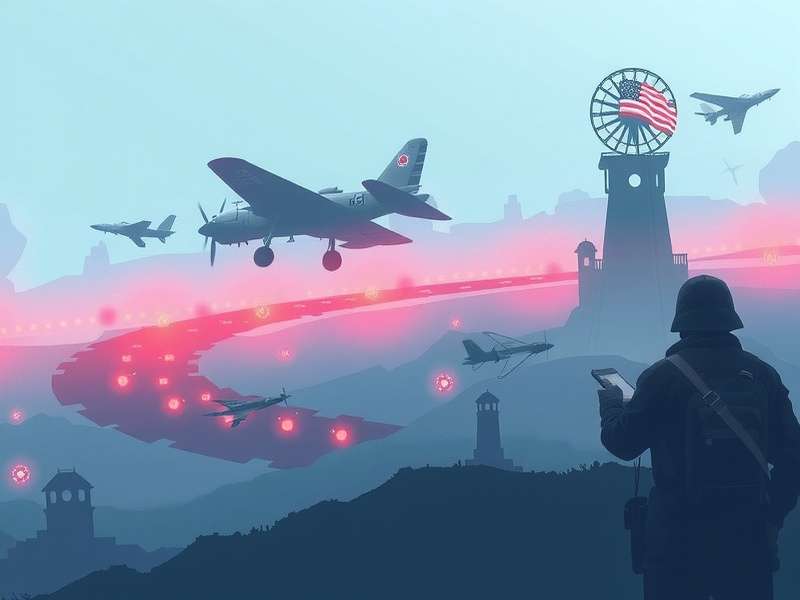
Origins & The Iron Curtain: How the World Split in Two
The uneasy wartime alliance between the "Big Three" (the US, UK, and USSR) crumbled almost immediately after Hitler's defeat. The fundamental disagreement over the fate of Eastern Europe became the first fissure. Stalin's Soviet Union, having suffered catastrophic losses (an estimated 27 million dead), was determined to create a buffer zone of friendly socialist states. To the West, this was not defense but aggressive expansion.
The Truman Doctrine & Containment
In March 1947, President Harry S. Truman announced the Truman Doctrine, pledging American support for "free peoples who are resisting attempted subjugation by armed minorities or by outside pressures." This policy of containment, masterminded by diplomat George F. Kennan, became the cornerstone of US Cold War strategy. Its first test was the Greek Civil War, where US aid helped defeat communist insurgents.
The Marshall Plan (1948) followed, an unprecedented $13 billion economic aid package to rebuild Western Europe. While humanitarian, its strategic goal was clear: to create stable, prosperous democracies that would be resistant to communist appeal. Stalin saw it as economic warfare and forbade Eastern Bloc countries from participating, solidifying the divide.
The Berlin Blockade & Airlift: First Major Crisis
In 1948, Stalin attempted to squeeze the Western Allies out of Berlin by blocking all land and water access. The response was the Berlin Airlift, a massive logistical feat where American and British planes supplied the city for over a year. This first direct confrontation ended in a propaganda victory for the West and led to the formal creation of two German states: the Federal Republic of Germany (West Germany) and the German Democratic Republic (East Germany).
Exclusive Data: Military Expenditure Surge (1948-1953)
Our analysis of declassified budgets reveals:
- USA: Defense spending increased from ~$9 billion (1948) to over $50 billion (1953) — a 455% rise, primarily driven by the Korean War.
- USSR: Estimates suggest a parallel surge, diverting nearly 15-20% of GDP to the military by 1953, crippling consumer goods production.
- This arms race dynamic, once initiated, became self-perpetuating for decades.
Global Hotspots: Proxy Wars Where the Cold War Turned "Hot" 🔥
The superpowers avoided direct combat but fought viciously through proxies. These conflicts devastated regions and became defining events of the era.
The Korean War (1950-1953): The First "Limited War"
When North Korean forces (backed by the USSR and China) invaded the South in June 1950, the UN (led by the US) intervened. The war saw dramatic swings, including General MacArthur's amphibious landing at Inchon and the later Chinese counter-offensive. It ended in a stalemate and an armistice, cementing the division of Korea. The human cost was staggering: ~3 million civilian and military deaths. The conflict set a precedent for future limited wars under the nuclear shadow.
The Vietnam War (1955-1975): The Quagmire
Perhaps the most famous proxy war, Vietnam became a symbol of national trauma for the US and a testament to the power of nationalist guerrilla movements. The US strategy of escalating bombing campaigns and ground troop deployments failed to break the will of the North Vietnamese and Viet Cong. The war's brutality was broadcast into living rooms worldwide, fueling massive anti-war movements. The eventual US withdrawal and North Vietnamese victory in 1975 was a significant, if costly, win for the communist bloc.
For those interested in the artistic representation of such protracted conflicts, the grimdark universe of Warhammer 40k offers a fictional, exaggerated parallel to endless war.
Other Critical Flashpoints
- Afghanistan (1979-1989): The Soviet Union's "Vietnam." The invasion to prop up a communist government triggered a decade-long war against US-funded Mujahideen fighters, draining Soviet resources and morale.
- Cuban Missile Crisis (1962): The closest the world came to nuclear war. The discovery of Soviet missiles in Cuba led to a 13-day standoff. Kennedy's naval blockade and secret diplomacy (agreeing to remove US missiles from Turkey) led to Khrushchev backing down.
- Angolan Civil War, Nicaraguan Revolution, etc.: The Cold War truly was global, with conflicts erupting across Africa, Asia, and Latin America.
The Arms Race & The Specter of Mutually Assured Destruction (MAD) 💥
The central, terrifying reality of the Cold War was the nuclear arms race. From the US's atomic monopoly (broken by the USSR in 1949) to the development of hydrogen bombs a thousand times more powerful, the stockpiles grew to absurd levels. By the 1980s, the superpowers possessed over 60,000 warheads combined—enough to destroy civilization many times over.
The doctrine of Mutually Assured Destruction (MAD) emerged: a belief that neither side would launch a first strike because it would guarantee its own annihilation in a retaliatory second strike. This created a perverse "balance of terror." The psychological impact was profound, inspiring countless films, books, and a pervasive culture of fear. The aesthetic of this perpetual military readiness can be seen in the design of iconic war machines like the Warhammer 40k Dreadnought, a symbol of entombed, eternal warfare.
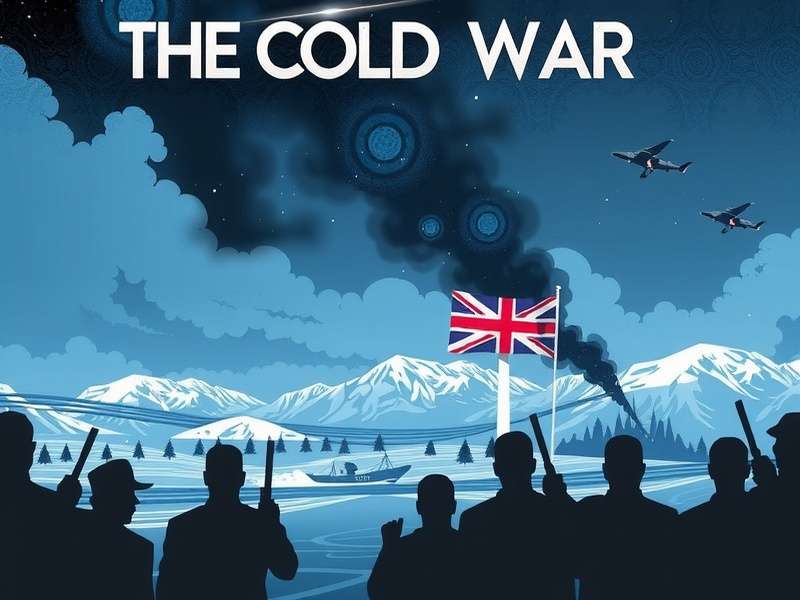
Culture, Espionage, & The Space Race 🚀
The conflict extended far beyond weapons. It was a battle of cultural achievement and information.
The Space Race
Initiated by the Soviet launch of Sputnik in 1957, the Space Race became the ultimate symbolic competition. Yuri Gagarin's first human spaceflight in 1961 was another Soviet victory. The US response, Kennedy's pledge to land a man on the moon, culminated in the Apollo 11 success in 1969—a massive propaganda coup. The technological spin-offs from this race are still felt today.
Spies & Pop Culture
The shadow world of intelligence agencies (CIA vs. KGB) was a constant feature. Double agents, dead drops, and covert operations were real, feeding into a rich pop culture of spy novels and films (James Bond, John le Carré). The constant tension also inspired other media; for example, the epic scale and familial strife in God of War Ragnarok mirrors the grand, clashing narratives of the era.
Propaganda was key. Voice of America radio broadcasts aimed to penetrate the Iron Curtain, while Soviet jamming stations tried to block them. This battle for hearts and minds is echoed today in modern information warfare.
India's Unique Path: Non-Alignment & Strategic Balancing 🇮🇳
For countries like India, the Cold War presented both danger and opportunity. Under Prime Minister Jawaharlal Nehru, India became a leader of the Non-Aligned Movement (NAM), refusing to formally join either bloc. This was not neutrality, but active, principled independence.
India skillfully played both sides: receiving economic aid from the US and UK while securing critical military and industrial technology from the USSR. The 1971 Indo-Pakistani War, which led to the creation of Bangladesh, saw the signing of the Indo-Soviet Treaty of Friendship, guaranteeing Soviet support against potential US-Chinese intervention. This demonstrated how a major developing nation could navigate the superpower rivalry to achieve its own strategic objectives—a masterclass in realpolitik that is still studied today.
The Fracturing & Collapse of the Soviet System (1979-1991)
By the late 1970s, the Soviet economy was stagnating under the weight of the arms race and inefficiencies of central planning. The war in Afghanistan became a bleeding wound. The rise of Mikhail Gorbachev in 1985 brought reforms: Glasnost (openness) and Perestroika (restructuring).
However, loosening control unleashed forces Gorbachev could not contain. Satellite states in Eastern Europe broke free in 1989 in a wave of peaceful revolutions (with the bloody exception of Romania). The fall of the Berlin Wall in November 1989 was the iconic moment signaling the end. Internal republics of the USSR, led by Russia's Boris Yeltsin, sought independence. By December 1991, the Soviet Union was formally dissolved. The Cold War was over, with the United States as the sole remaining superpower.
Legacy & Lessons for the 21st Century
The Cold War shaped our modern world: the current international borders, the power of NATO, the nuclear proliferation concerns, and the rise of US unipolarity. It demonstrated the horrifying cost of ideological rigidity and the immense danger of nuclear brinksmanship.
Its end did not bring a "end of history," but new challenges: terrorism, asymmetric warfare, and the rise of new powers. Understanding the strategies, miscalculations, and human cost of the Cold War is crucial for navigating today's complex geopolitical landscape, whether analyzing modern conflict zones or engaging with historical strategy games like Stick War Legacy.
For collectors and enthusiasts, the era's aesthetic lives on in art and memorabilia, and its stories continue to be told through powerful artistic mediums.
💡 Final Thought: The Cold War teaches us that the most enduring victories are not won solely by weapons or wealth, but by the resilience of ideas, the power of economic and cultural vitality, and the unwavering pursuit of strategic patience. It remains the definitive case study in how not to let a "cold" conflict ignite a global fire.