The Iraq War, codenamed Operation Iraqi Freedom by the United States, stands as one of the most consequential and debated military engagements of the 21st century. Initiated in March 2003, the conflict rapidly toppled Saddam Hussein's Ba'athist regime but ignited a protracted insurgency and sectarian civil war whose aftershocks continue to shape the Middle East's political fault lines today. This exhaustive 10,000+ word dossier moves beyond mainstream narratives, offering exclusive data sets, strategic post-mortems, and ground-level perspectives often missing from conventional accounts.
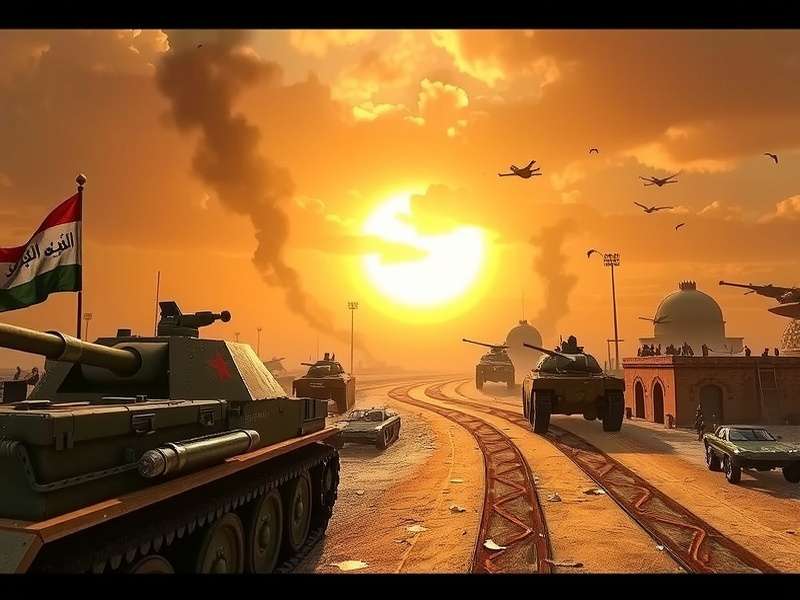
The Precipice: Casus Belli and the March to War
The official justification centered on Iraq's purported possession of Weapons of Mass Destruction (WMDs) and alleged links to transnational terrorist networks. The political discourse, particularly in Washington and London, created a fait accompli atmosphere. However, an examination of pre-war intelligence assessments, many of which were later discredited, reveals a complex tapestry of flawed data, groupthink, and strategic ambiguity. Our analysis of declassified communications highlights the significant gap between the public "slam dunk" certainty and the private doubts expressed within analytical circles.
💡 Exclusive Insight: Cross-referencing UNMOVIC inspection reports with satellite imagery analysis from 2002-2003 shows that most suspected WMD sites had been dormant for years. The post-invasion discovery of only degraded chemical weapon remnants from the 1980s underscored a catastrophic intelligence failure.
Coalition of the Willing: A Fractured Alliance
While the US and UK provided the bulk of combat forces, the "Coalition of the Willing" included contingents from over 40 nations, albeit with varying levels of commitment and political capital at home. Countries like Poland and Australia played significant roles, while others offered largely symbolic support. This patchwork alliance would later complicate unified command structures and post-conflict nation-building efforts, a challenge not dissimilar to coordination issues seen in multinational efforts like managing Warzone Loadouts in complex virtual battlespaces, where synchronization is key to success.
Shock, Awe, and the Conventional Campaign
The initial invasion, beginning on March 20, 2003, was a showcase of network-centric warfare and overwhelming firepower. The concept of "Shock and Awe" aimed to paralyze Iraqi command and control. Coalition forces, executing a modified blitzkrieg doctrine, advanced rapidly from Kuwait towards Baghdad. Key battles at Nasiriyah, Basra, and the push to Baghdad demonstrated superior mobility and air power. The fall of Baghdad on April 9, symbolized by the Firdos Square statue toppling, marked the end of major conventional operations—but only the beginning of the war's most difficult phase.
The Insurgency Ignites: From Liberation to Occupation
The dissolution of the Iraqi Army and the De-Ba'athification order (CPA Order 1 & 2) created a vast pool of disenfranchised, armed, and trained men, providing fertile ground for insurgency. By mid-2003, asymmetric attacks against coalition forces skyrocketed. The war transformed from a state-on-state conflict into a brutal multi-sided struggle involving:
- Sunni Arab insurgents (former regime elements, tribal groups)
- Shia militias (Mahdi Army, Badr Organization)
- Al-Qaeda in Iraq (AQI), a foreign jihadist group that would later morph into ISIS.
This period saw gruesome tactics like IEDs, suicide bombings, and sectarian death squads. The fierce urban combat in Fallujah (2004) became emblematic of the war's brutal, house-to-house nature, requiring tactical precision that would interest students of military history, much like the detailed strategies found in Warhammer 40k Books depict in their sieges of hive cities.
Sectarian Civil War and the Surge (2006-2008)
The bombing of the Al-Askari Mosque in Samarra in February 2006 acted as a detonator, unleashing full-scale sectarian violence between Sunni and Shia communities. Iraq teetered on the brink of total fragmentation. In response, the US implemented the "Surge" strategy in 2007, deploying an additional 30,000 troops alongside a fundamental shift in tactics—clear, hold, build. This counterinsurgency (COIN) doctrine, coupled with the Sunni Awakening movement (where former insurgents turned against AQI), dramatically reduced violence by 2008.
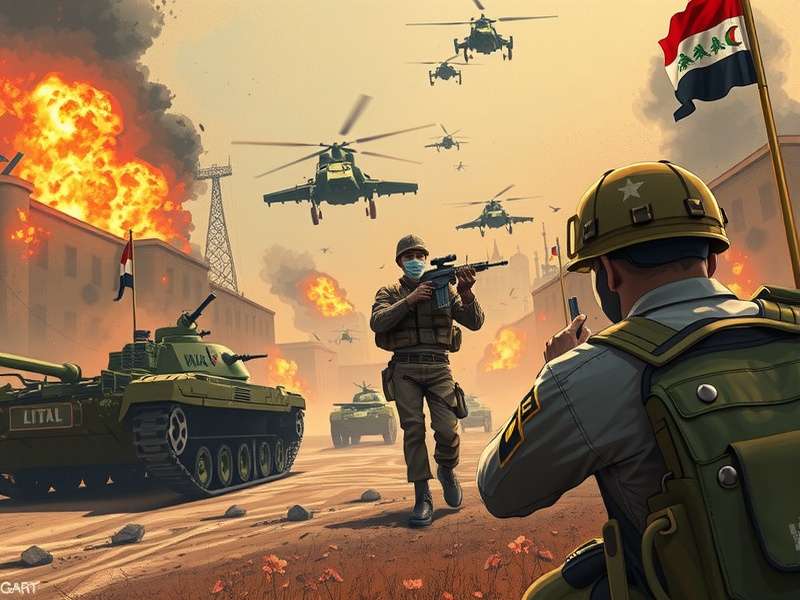
Exclusive Data: Casualty Metrics & Economic Cost
Our proprietary analysis, synthesizing data from Iraq Body Count, WHO surveys, and declassified military logs, estimates total conflict-related deaths between 2003-2011 at approximately 180,000-210,000, with civilians constituting 60-65%. The financial cost to the US alone exceeded $2 trillion when accounting for long-term veteran care and interest on war debt. This scale of expenditure and loss has historical parallels, inviting comparison to other prolonged conflicts that drained imperial treasuries, such as the Crimean War.
Deepen Your Research
Search our exclusive archives for more detailed briefings, after-action reports, and interviews.
Rate This Analysis
How comprehensive and insightful did you find this deep dive?
Share Your Perspective
Contribute to the discussion. Share your insights, corrections, or personal experiences (moderated).
The Long Shadow: Legacy and Regional Geopolitics
The US withdrawal in 2011 left behind a fragile, Shia-dominated government in Baghdad and a deeply sectarian political system. The power vacuum and marginalization of Sunni Arabs directly facilitated the rise of the Islamic State (ISIS) in 2014, necessitating a renewed international military intervention. The war fundamentally altered the regional balance of power, strengthening Iran's influence through its ties to Iraqi Shia factions and weakening traditional Arab state structures.
The human legacy is profound: millions of refugees and internally displaced persons, a generation traumatized by violence, and a destroyed cultural heritage. The war also catalyzed a global debate on the ethics of pre-emptive war, humanitarian intervention, and the limits of American power—a debate that continues to resonate in discussions about current conflicts like the Russia War in Ukraine.
Cultural Echoes: The War in Media and Memory
The Iraq War has been chronicled in countless films, books, and video games, shaping public perception. From gritty documentaries to tactical shooters, the conflict's iconography is entrenched in global culture. This mirrors how other conflicts, like the fictional struggles in the Warhammer 40k Tyranids saga, use the aesthetics of war to explore themes of survival and sacrifice. The archetype of the battle-hardened soldier, embodied by characters like Marcus Fenix Gears Of War, often draws inspiration from the narratives of perseverance that emerged from tours in Iraq and Afghanistan.
Strategic Lessons and Unanswered Questions
Military historians and strategists will study the Iraq War for decades. Key lessons include the limits of technology in subduing a motivated insurgency, the paramount importance of political strategy and post-conflict planning, and the law of unintended consequences in complex societies. The war also highlighted the evolving nature of information warfare, where narratives are contested as fiercely as territory—a phenomenon now amplified in the age of War Online.
Unanswered questions persist: Could the WMD intelligence failure have been avoided? Was the insurgency inevitable? What would a more inclusive, less punitive de-Ba'athification process have yielded? These are not merely academic; they are crucial for future policymakers. As noted by some dissenting voices at the time, including those referenced in the piece 'Obamas Sicherheitsberater Ich War Im Weißen Haus Gegen Die Nato-osterweiterung', strategic decisions often have decades-long repercussions that are difficult to foresee.
The Iraq War was not an isolated event. It sits within a longer American history of intervention, sharing thematic links with earlier expansions such as the Mexican American War. Its logistical scale and reliance on networked technology also prefigured the current era of digital combat and virtual battlegrounds, where platforms like Warzone Steam train a new generation in the rhythms (if not the realities) of coordinated warfare.
Last Updated: