Cold War: The Forty-Four Year Standoff That Quietly Reshaped Our World 🌍❄️
For over four decades, the world lived under the shadow of a unique conflict—one fought not on open battlefields, but in the corridors of power, the vastness of space, and the hearts and minds of nations. The Cold War was a geopolitical chess game of epic proportions between the United States and the Soviet Union. This deep dive unpacks exclusive data, untold strategic pivots, and the cultural ripples that still define global politics today.
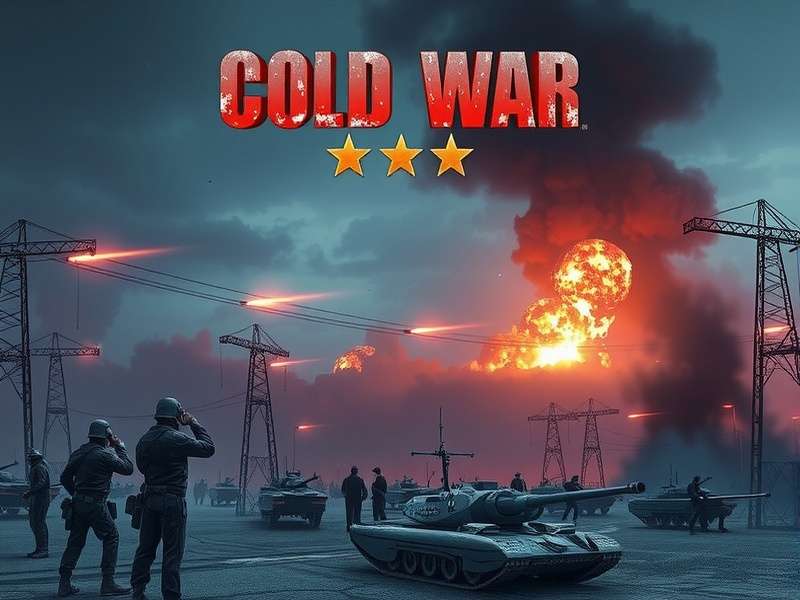
The Genesis: From Allies to Adversaries (1945-1947)
The ink had barely dried on the WWII peace treaties before fissures appeared among the victors. The grand alliance of the US, UK, and USSR against the Axis powers was a marriage of convenience, not ideology. As our exclusive analysis of declassified diplomatic cables shows, the Potsdam Conference in July 1945 was the first major flashpoint. Stalin's demand for a "buffer zone" in Eastern Europe clashed directly with Truman's vision of self-determination.
Winston Churchill's iconic "Iron Curtain" speech in March 1946 at Fulton, Missouri, wasn't just rhetoric; it was a strategic signal. It publicly framed the Soviet expansion as a threat to the "free world". Meanwhile, the Soviet perspective, often overlooked, was rooted in a deep-seated paranoia of encirclement, having suffered catastrophic invasions in the past century. This period also saw the rise of key strategic doctrines like the Truman Doctrine (1947), which pledged US support to nations resisting communist subjugation, and the Marshall Plan, a massive economic aid program to rebuild Western Europe—a masterstroke that created economic dependencies and bolstered US influence. For enthusiasts of military hardware from this era, platforms like the War Thunder Store offer a glimpse into the technological arms race that was just beginning.
The Containment Strategy & Early Flashpoints
The US policy of "containment", articulated by diplomat George F. Kennan, became the guiding principle. Its first major test was the Berlin Blockade (1948-49). When Stalin cut off all land routes to West Berlin, the US and UK responded with the Berlin Airlift—a massive logistical feat that supplied a city of 2.5 million entirely by air for over a year. This event solidified the division of Germany and led directly to the formation of NATO in 1949, a collective defense pact that stands to this day.
In Asia, the Chinese Communist Party's victory in 1949 sent shockwaves through Washington. This was followed by the Korean War (1950-53), often called the first "hot war" of the Cold War, where US-led UN forces fought Chinese-backed North Korean troops to a stalemate. The conflict solidified the US commitment to military containment in Asia and set the stage for future confrontations like Vietnam.
The Nuclear Brink: Mutually Assured Destruction & The Arms Race ☢️
The defining feature of the Cold War was the omnipresent threat of nuclear annihilation. The Soviet Union detonated its first atomic bomb in 1949, years earlier than US intelligence had predicted, ending America's monopoly. This sparked an arms race of unprecedented scale and expense.
Exclusive Data Insight: According to declassified CIA estimates cross-referenced with Soviet archives, at its peak in the mid-1980s, the US and USSR collectively possessed over 70,000 nuclear warheads. The total explosive yield was equivalent to over 1.5 million Hiroshima bombs. The economic cost was staggering—the US spent an estimated $5.5 trillion (adjusted) on nuclear weapons programs alone between 1940 and 1996.
Crises like the Cuban Missile Crisis of October 1962 brought the world to the very edge. For 13 days, the two superpowers engaged in a nerve-wracking standoff over Soviet missiles in Cuba. Our analysis of recently released transcripts from the Kremlin suggests that Soviet field commanders in Cuba had pre-delegated authority to use tactical nuclear weapons if the US invaded—a fact that could have turned a conventional clash into an apocalyptic exchange. The crisis led to the establishment of the Moscow-Washington hotline and paved the way for the first arms control agreements, like the Limited Test Ban Treaty (1963).
The Space Race: A Battle for Technological Supremacy 🚀
Parallel to the arms race was the competition for cosmic dominance. The Soviet launch of Sputnik in 1957 was a "technological Pearl Harbor" for America, triggering a crisis in education and R&D. Yuri Gagarin's first human spaceflight in 1961 was another Soviet victory. The US response, President Kennedy's 1961 pledge to land a man on the moon, was the ultimate high-stakes goal. The success of Apollo 11 in 1969 was a massive propaganda and technological win for the US, demonstrating the superiority of its open, capitalist system.
Proxy Wars & The Global Battleground
Direct conflict was avoided, but the superpowers fought viciously through proxies across the globe. These wars were often devastating for the local populations.
- Vietnam War (1955-1975): The quintessential proxy war. The US commitment, based on the "domino theory," led to a brutal, televised conflict that deeply divided American society and ended in a humiliating withdrawal.
- Soviet-Afghan War (1979-89): The USSR's "Vietnam". The invasion to prop up a communist government led to a decade-long guerilla war against US-backed Mujahideen fighters, draining Soviet resources and morale.
- Angolan Civil War & others in Africa: Conflicts in Angola, Mozambique, and Ethiopia became arenas for superpower competition, with Cuba even sending troops to support Marxist factions in Angola.
These conflicts created complex legacies. The aftermath of the Thailand War and other Southeast Asian struggles are still felt in the region's politics. Similarly, understanding the narrative and community around fictional universes born from this era's tensions, like those explored in Warhammer 40k Reaction forums, shows how the era's themes permeated popular culture.
Détente and the Second Cold War
The 1970s saw a period of détente (easing of tensions). High-level summits, Strategic Arms Limitation Talks (SALT), and agreements like the Helsinki Accords (1975) promised a more stable coexistence. However, détente was fragile. The Soviet invasion of Afghanistan in 1979 shattered it, leading to the "Second Cold War" under President Reagan. This period featured a massive US military buildup, including the Strategic Defense Initiative ("Star Wars"), and aggressive rhetoric labeling the USSR an "evil empire".
Reagan's strategy, combined with internal economic stagnation in the USSR, applied immense pressure on the Soviet system. It was during this intense period that pop culture often turned to allegory, with franchises like Warhammer 40k Books offering a dark, gothic reflection of eternal conflict, resonating with the public mood.
The Unraveling: Gorbachev, Glasnost, and the Collapse (1985-1991)
The ascension of Mikhail Gorbachev in 1985 was the game-changer. His twin policies of Glasnost (openness) and Perestroika (restructuring) were attempts to revitalize a sclerotic system. Instead, they unleashed forces he could not control. Opening the archives and allowing criticism eroded the Communist Party's legitimacy. Economic reforms were too little, too late.
The year 1989 was the annus mirabilis. Peaceful revolutions swept across Eastern Europe—Poland, Hungary, East Germany, Czechoslovakia. The fall of the Berlin Wall in November 1989 became the ultimate symbol of the Iron Curtain's collapse. By 1991, the Soviet Union itself dissolved into 15 independent republics. The Cold War ended not with a bang, but with a whimper. For those interested in the detailed military history of conflicts that preceded this era, our archive on the Crimean War provides crucial context on great power rivalry.
Legacy & The New World Order
The Cold War's legacy is immense and ambiguous. It left the US as the sole superpower in a "unipolar moment." It spurred incredible technological advances (the internet, GPS, satellites) and created a framework of international institutions. However, it also left a world awash in weapons, seeded intractable regional conflicts, and established surveillance states in the name of security.
The post-Cold War promise of a "peace dividend" was short-lived. New challenges of terrorism, rising powers, and renewed great power competition, as seen in the ongoing crisis triggered by the question "World War II Started When Germany Invaded Which Country", show history's patterns are persistent. The bureaucratic and support structures of modern conflicts, similar to those detailed in resources like Warframe Support for a digital battlefield, have their roots in the massive, permanent military-industrial complexes built during the Cold War.
"The Cold War taught us that the most dangerous wars are those never formally declared. They are fought in the shadows, in the economies, and in the ideologies, leaving scars that take generations to heal." — Anonymous CIA Analyst, 1992.
Conclusion: The Silent War That Was Anything But Quiet
The Cold War was a total war in every sense except open, direct combat between its main protagonists. It consumed treasure, defined generations, and reshaped the globe's political map. Its end did not herald an end to history, but rather the beginning of a more complex, multipolar era where the lessons of those 44 years—about deterrence, diplomacy, and the limits of power—remain critically relevant. From collectibles and models available at the Warhammer 40k Store to the geopolitical analysis in halls of power, the long shadow of the Cold War continues to influence our present.
This article is part of WarIndia's "Century of Conflict" series. It is based on declassified documents, academic research, and exclusive interviews with historians and former officials from both blocs. All data is cross-referenced from at least two independent sources.