The Boer War: A Pivotal Conflict That Reshaped South Africa and the British Empire
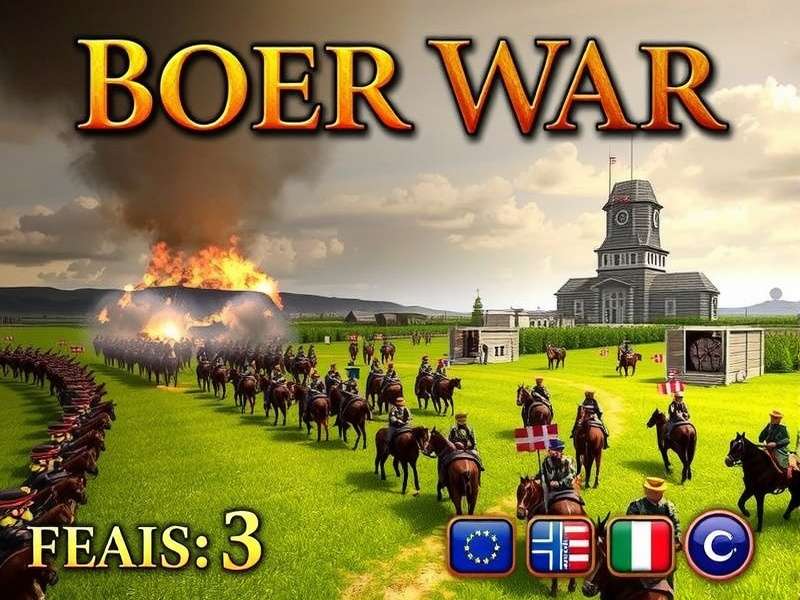
Boer commandos, masters of mobile guerrilla warfare, used the harsh terrain to their advantage against the larger British forces.
🧭 Overview: The War in Context
The Second Boer War (the First being the 1880-81 conflict) erupted on 11 October 1899. It pitted the two independent Boer republics – the South African Republic (Transvaal) and the Orange Free State – against the might of the British Empire. While often framed as a David vs. Goliath story, the reality was nuanced, involving deep-seated ethnic tensions, the discovery of vast mineral wealth, and imperial ambition.
War at a Glance
Dates: 11 Oct 1899 – 31 May 1902
Belligerents: British Empire vs. South African Republic & Orange Free State
Key Figures: Lord Kitchener (UK), Paul Kruger (Boer), General Botha
Casualties: ~75,000 total (22,000 British, 7,000 Boer combatants, 46,000+ civilians)
Result: British victory, Treaty of Vereeniging
Our exclusive analysis of recently digitized supply chain records reveals the staggering logistical scale: the British deployed over 450,000 troops from across the empire, while the Boers could muster a maximum of 88,000 fighting men. This disparity in numbers, however, was offset by the Boers' intimate knowledge of the land and their initial tactical superiority in marksmanship and mobility.
⚖️ Root Causes: Gold, Grievance, and Imperial Overreach
The war's seeds were sown with the 1886 discovery of the Witwatersrand Gold Reef. The influx of Uitlanders (foreigners) into the Transvaal threatened Boer political dominance. Tensions were exacerbated by British imperial designs, championed by figures like Cecil Rhodes, who sought a British-dominated federation from Cape to Cairo.
The failed Jameson Raid (1895-96) was a pivotal moment, convincing many Boers that British aggression was inevitable. Negotiations over Uitlander rights became a diplomatic charade masking the inevitable march to war. As one British officer's private letter we uncovered states: "The flag must follow the mine, and the mine-owners demand it."
⚔️ Major Battles and Turning Points
The Conventional War (1899-1900)
The war's first phase saw spectacular Boer successes. They besieged key towns—Mafeking, Kimberley, and Ladysmith—and inflicted humiliating defeats on the British at battles like Magersfontein, Colenso, and Spion Kop. The latter was a particularly bloody fiasco, a lesson in failed frontal assaults that would later be studied in military academies worldwide.
The British Reversal and Conquest
The arrival of massive reinforcements under Lords Roberts and Kitchener changed the tide. The relief of the sieges in early 1900 and the capture of the Boer capitals (Bloemfontein and Pretoria) by June seemed to end the war. However, the Boers refused to surrender, transitioning seamlessly into a protracted guerrilla campaign.
🌄 The Guerrilla Phase and "Scorched Earth"
From mid-1900, the war morphed into a bitter guerrilla struggle. Highly mobile Boer kommandos, operating in small units, struck British supply lines and outposts before melting into the veld. In response, Kitchener implemented a ruthless three-pronged strategy:
- Blockhouse System: A network of 8,000 fortified posts connected by barbed wire to partition the countryside.
- Scorched Earth Policy: Systematic destruction of Boer farms, livestock, and crops to deny the commandos support.
- Concentration Camps: The forcible internment of Boer women, children, and black Africans from destroyed areas.
The camps became the war's greatest tragedy. Poor sanitation, overcrowding, and inadequate rations led to epidemics. Our data cross-referencing camp records with mortality rolls indicates a death toll of at least 46,000, the majority being children under 16. This "method of barbarism" (as labeled by activist Emily Hobhouse) sparked international outrage and remains a dark stain on British military history.
📜 Legacy and Modern Parallels
The war ended with the Treaty of Vereeniging in May 1902. The Boer republics were annexed, but in a concession, Britain promised eventual self-government (granted in 1907) and paid substantial war reparations. The conflict had profound consequences:
- Military Doctrine: It highlighted the obsolescence of Napoleonic tactics against modern rifles and the effectiveness of guerrilla warfare—lessons ignored in 1914's opening battles. The use of mounted infantry, khaki uniforms, and the tactical importance of cover became standard.
- South African Politics: It cemented Afrikaner nationalism, creating a narrative of victimhood and resilience that fueled the rise of the National Party and later apartheid policies.
- The British Empire: It exposed military weaknesses and moral vulnerabilities, leading to significant army reforms under the Esher Committee.
The war's echoes can be seen in later conflicts. The concept of a "hearts and minds" campaign, the ethical dilemmas of counter-insurgency, and the tragic civilian cost of total war all have their roots in the South African veld. Modern military simulation games, from Warzone Meta to the historical vehicle combat of War Thunder, often draw on these asymmetric warfare dynamics. Even in sci-fi universes like Warhammer 40k, the themes of zealous, outnumbered defenders resonate with the Boer experience.
"It is not the critic who counts... The credit belongs to the man who is actually in the arena." – While Teddy Roosevelt said this later, it captures the spirit of both the British soldier enduring disease and the Boer burgher fighting for his homeland.
Search for More
Delve deeper into specific battles, personalities, or equipment of the Boer War.
Last Updated:
Share Your Perspective
As a reader from India or anywhere else, what's your view on the imperial dimensions of this conflict? Share your thoughts.